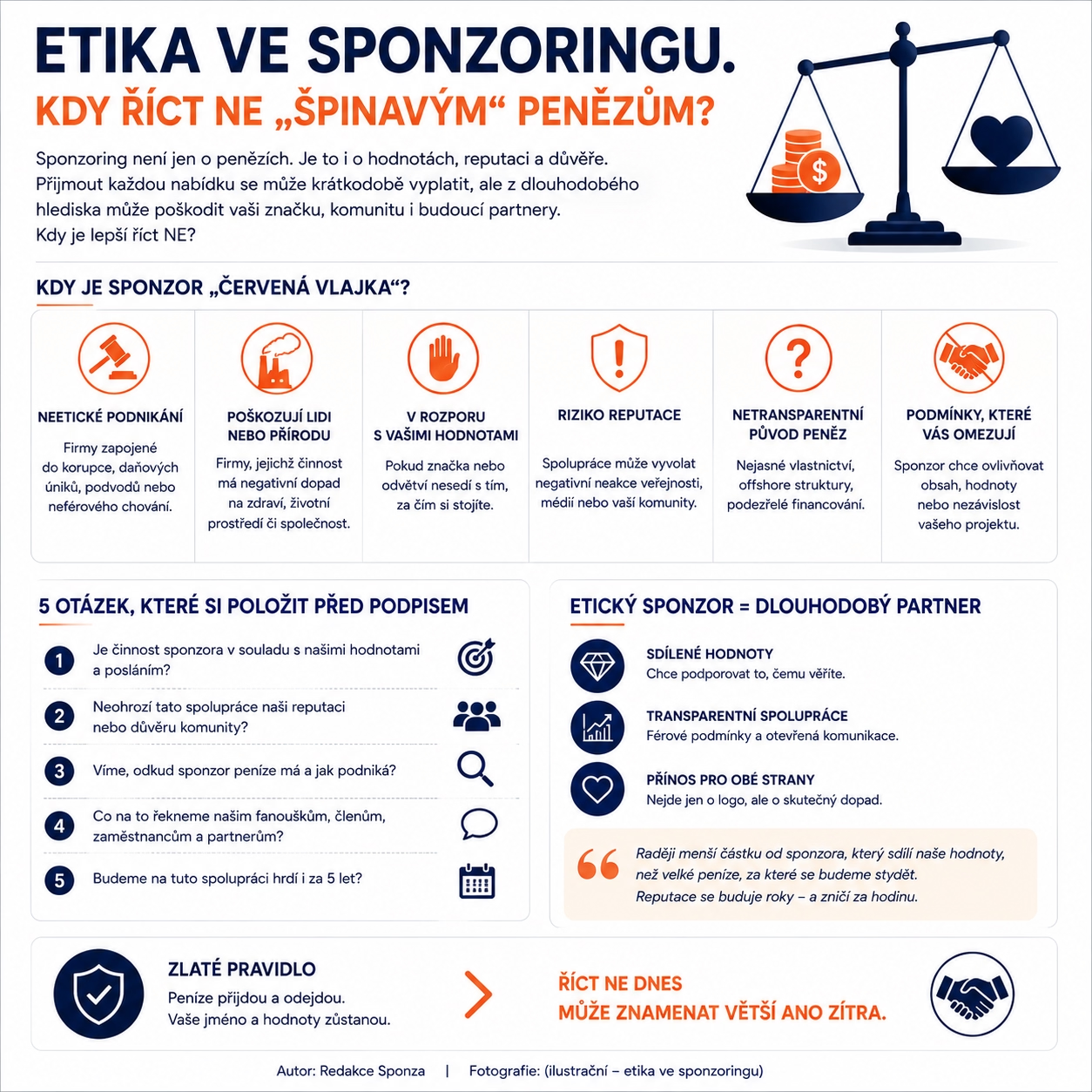
You get an offer from a company. The money is tempting. But something feels off. The product harms health, the company has questionable practices, or you suspect support from this source will harm your community. What should you do? Ethics in sponsorship isn’t just a philosophical question — it’s a strategic choice that affects your reputation, credibility and future.
When is money “dirty”?
There’s no universal blacklist. For some people tobacco or the arms industry is unacceptable; for others it’s betting companies or businesses with a large carbon footprint. Each organisation and creator must set their own ethical compass. Still, some sectors repeatedly raise serious questions.
| Industry / example | Potential issue | When it may be acceptable |
|---|---|---|
| Tobacco industry | Supports an addictive product linked to cancer and other diseases | Almost never — many countries ban tobacco advertising altogether. Rare exception: public-health campaigns about its harms (paradoxical) |
| Alcohol | Can encourage excessive consumption, risk of dependency, traffic accidents | Beer sponsors at sporting events are common but sensitive where youth are involved. Can be conditional on support for awareness campaigns |
| Betting companies (gambling) | Risk of addiction, debt, family harm | Some countries allow sponsorship, but ethical doubts remain. Better to refuse if you have many young fans |
| Arms industry | Profits linked to violence and loss of life | Possible exception: companies making protective equipment for police or the military for defensive purposes |
| Fossil fuels | Climate change, greenwashing, environmental destruction | If a company is demonstrably investing in a real green transition and your project is environmental, a discussion may be possible |
Examples from practice — who said no
Public figures and smaller creators have already turned down controversial sponsors. Actor Leonardo DiCaprio has been consistent in refusing partnerships with companies tied to fossil-fuel extraction. Some athletes returned money to betting companies after discovering fans had fallen into gambling. Locally, many artists and projects chose to cancel events rather than accept backing from entrepreneurs with dubious reputations.
They offered me a decent sum. But when I learned it was a company that aggressively evicted tenants, I thanked them and declined. The community later told me I’d done the right thing. I lost the money, but I gained respect.
Michal, organiser of a community garden festival
How to spot greenwashing or fake ethics
- Do your due diligence — not just the company website, but independent sources (news coverage, court cases, employee reviews).
- Look for credible certifications — B Corp, Fair Trade, EMAS, though be aware these can be misused.
- Ask for concrete numbers — how much CO₂ have they actually reduced? What is the composition of their board? Transparency matters.
- Listen to your community — if your audience distrusts the company, the partnership will likely harm you.
What if you’ve already signed a contract?
Sometimes controversies emerge only after contracts are signed. You then have several options: terminate the partnership (even accepting penalties), publicly distance yourself, or renegotiate the terms (for example, the company funds a counter-programme such as gambling-awareness work or an environmental project). Don’t hide the issue — silence makes you complicit.
Conclusion — money isn’t everything
Saying no to “dirty money” is hard, especially when you’re starting out and every crown counts. But in the long run it pays to partner only with those you can look in the eye. Your name, your community and your values are worth more than a one-off payment. If you stay consistent, you’ll attract the right sponsors — those who pull in the same direction and strengthen, not damage, your ethics.
Author: Sponza editorial team
Photo: (illustrative — the balance between ethics and money)