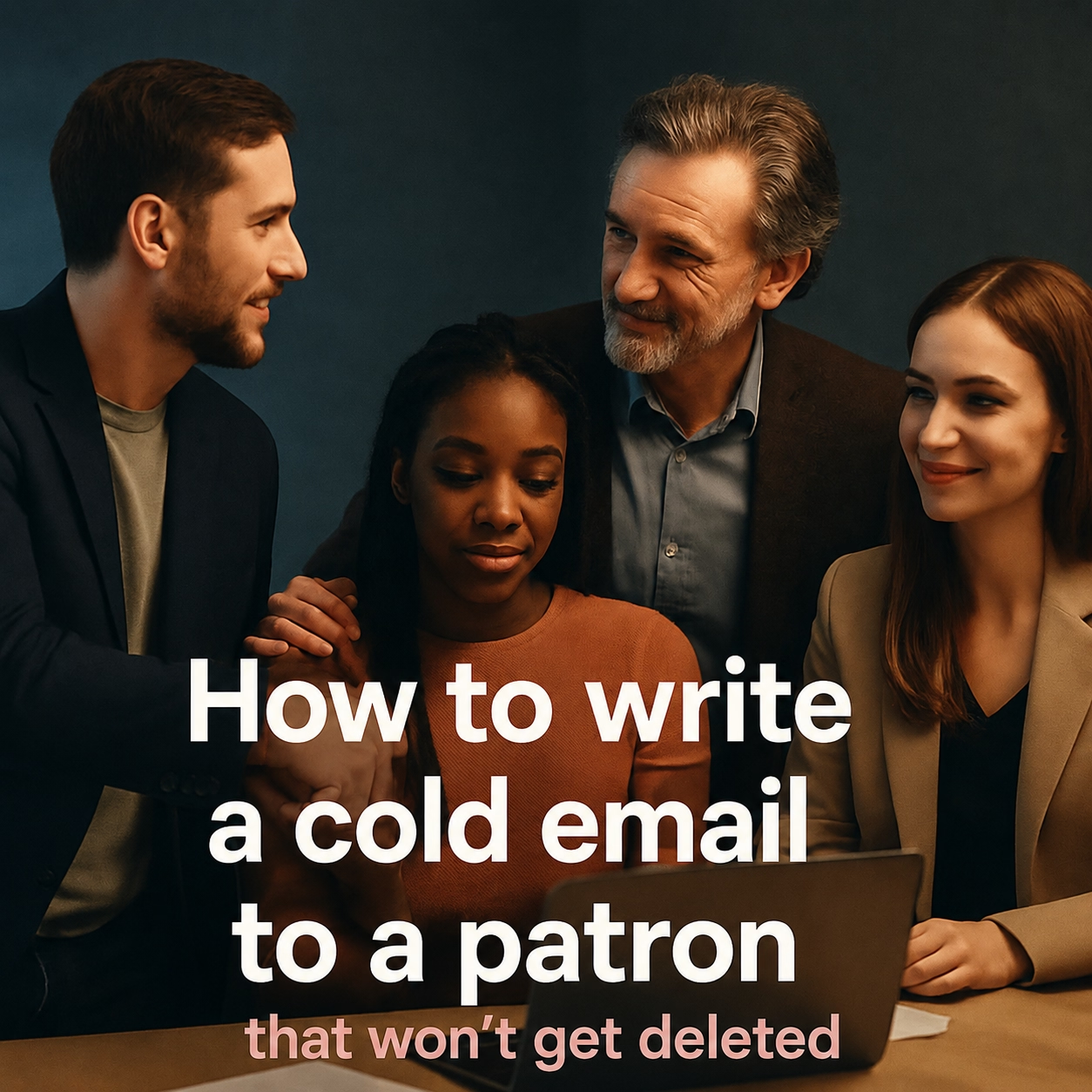
“Dear Director, we would like to contact you…“ This is how 99% of cold emails begin. And 99% of them end up in the bin before the first paragraph is finished. Patrons are overwhelmed. If you want your email opened, read and replied to, you need to play a different game. Here is a step‑by‑step guide — including templates that work.
First impression: the subject line decides everything
A patron sees only the subject line and the sender’s name. If it’s “Nonprofit XY — request for support,” they delete it. If it’s personal, specific and non-salesy, your chances rise.
Sample subject lines that work:
| Works | Doesn’t work |
|---|---|
| “Jan Novák from you — 5 minutes for a coffee?” | “Request for a financial gift” |
| “A collaboration idea that won’t waste your time” | “Important — request for support” |
| “Your favourite club is looking for a patron” (only if you know they’re a fan) | “Call for donations” |
| “We’d like to thank you — and offer something” | “Help us save the theatre” (dramatic but overused) |
Email structure: Max 2 short paragraphs + 1 sentence with a call to action
Long emails nobody reads. Respect the patron’s time. Ideal structure:
- Intro (1 sentence) – who you are and why you’re writing to them specifically (connectors: “we got your contact from…”, “I noticed your support of…”).
- The offer (3–4 sentences) – what do you want? Don’t say “money.” Say: “We’d like to show you our project and offer you a chance to be part of it.”
- Action (1 sentence) – what should they do now? “Can we meet for 15 minutes over coffee? Tell me what suits you.”
- Signature – name, role, phone, website.
Sample email — for a cultural organization (theatre, gallery)
Subject: Petra from Theatre X — 5 minutes for a coffee?
Hello Mr. Novák,
Your colleague Petr from Realty Agency Y mentioned you enjoy theatre and sometimes consider how to support culture in our town.
We’d love to show you behind the scenes at our theatre and invite you to become a patron — no commitment, just a conversation. You don’t have to promise anything right away.
Could you spare 15 minutes next week? Let me know what suits you. I look forward to hearing from you.
Petra Novotná
Director, Theatre X
+420 123 456 789
Sample email — for a sports club
Subject: The club where your son started? (František, hockey)
Hello Engineer,
We know your son František played youth hockey with our club. Today we are a small club with big dreams.
We want to build a new players’ bench and create a place where kids feel at home. We’re looking for a few people to help fund this — and we’d love to include you. We’re not asking for anything right away, just inviting you to see the club.
Would 20 minutes on Tuesday afternoon work for you? Please let us know.
Jan Malý, Coach and Vice‑Chair
tel: 777 123 456
Common mistakes that guarantee the bin
- “Dear Sir,” without a name – if you don’t know the name, you’re not ready. Find it (LinkedIn, company website, municipal records).
- Long list of your achievements – patrons don’t care about your annual report; they care about what you can do for them.
- Asking for money in the first email – it’s like proposing on the first date. You want a meeting, not a bank transfer.
- Attachments (logo, PDF, budget) – nobody opens them; they might trigger virus warnings. Put essential info in the email body or link to your website.
- Phrases like “every crown helps” – it sounds desperate and unprofessional.
What to do if they don’t reply? Follow‑up is key
People are busy. One email is often overlooked. After one to two weeks send a short follow‑up (max 2 sentences):
“Mr. Novák, I wrote last week about a possible collaboration. I don’t want to pester you, just checking the email arrived. If you’re not interested, reply ‘no’ and I’ll respect that. Thank you, Petra.”
If there’s still no reply after the second email, give them six months. Then try a different channel (phone, LinkedIn, or meeting them in person at an event).
The biggest mistake? Writing the way you yourself wouldn’t want to read. Put your email in the patron’s shoes — would you open it? If not, rewrite it.
– David, fundraiser with 10 years’ experience
Summary — a checklist before you hit send
- ☐ The subject is short, personal and doesn’t trigger spam filters.
- ☐ I know a name and at least one connector (“from…”, “I noticed…”).
- ☐ The email has a maximum of 5 short sentences.
- ☐ I’m not asking for money—only for a meeting.
- ☐ No attachments or melodrama.
- ☐ The signature includes a phone number (to overcome distrust).
- ☐ I let the email “sit” for at least an hour and then re‑read it.
Author: Sponza Editorial Team
Photographs: (illustrative – open laptop with an email, a bin full of papers)
Štítky: Osobnosti, Partnerství, Podpora