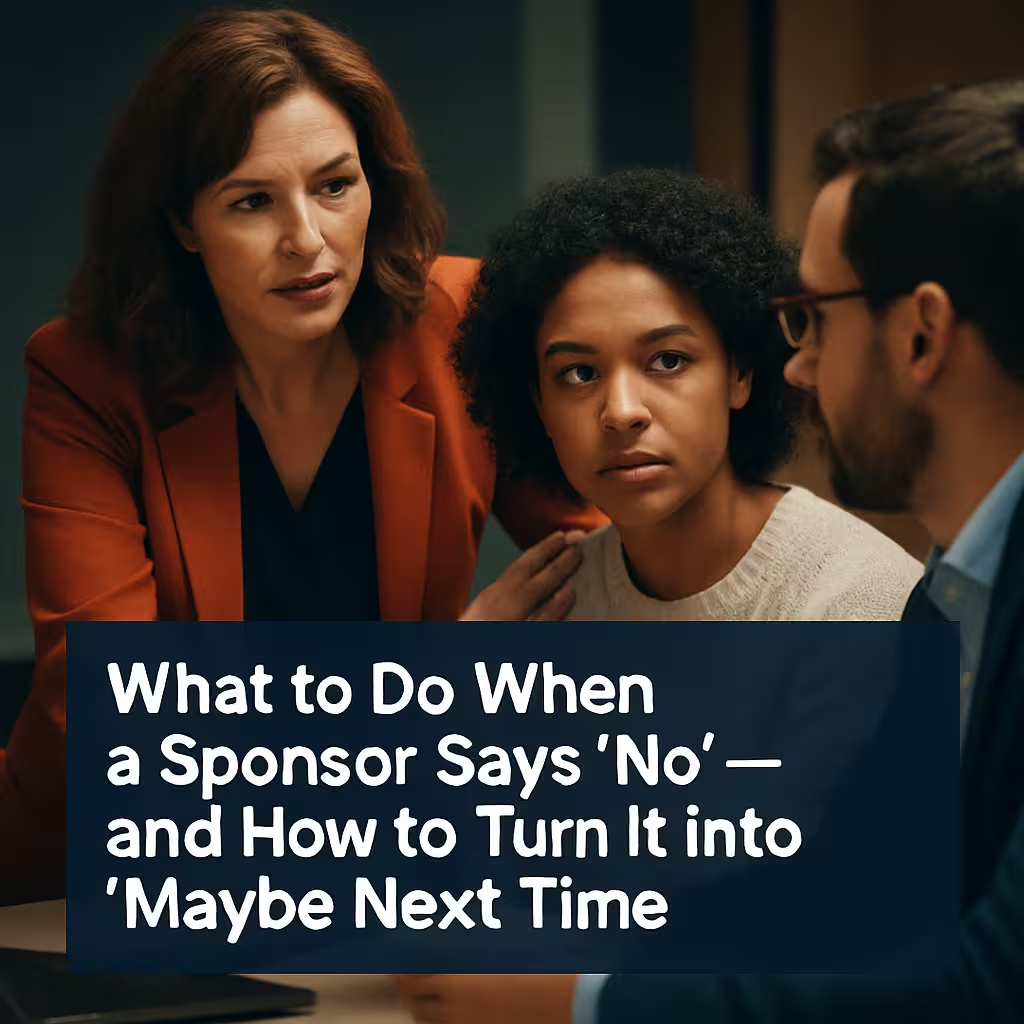
“Sorry, we don’t have budget this year.” “It doesn’t align with our strategy.” “Maybe next year.” Sound familiar? Every fundraiser who has ever approached a company for sponsorship has heard at least one of these lines. Many take it as the final full stop. That’s a mistake. “No” doesn’t have to be the end. Often it’s the start of a different conversation. Here are five ways to turn a rejection into a future partnership.
Why companies say “no” (and what they really mean)
Before you start arguing with the answer, understand what it really means. In about 80% of cases “no” doesn’t mean “your event is bad,” but rather:
- “We don’t have funds right now.” (This year’s budget is already allocated, but next year may be different.)
- “We don’t understand your offer.” (They don’t see the benefit for them.)
- “You’re not a priority for us.” (You can become one if you meet their needs.)
- “You contacted the wrong person.” (The marketing director may not have the authority—you may need the owner.)
5 ways to work with “no” — and not burn bridges
1. Ask “why” — you’ll get a roadmap for next time
Respond: “Thank you for your honesty. May I ask what the main reason was? That will help us improve future proposals.” Companies appreciate that you want to learn. You’ll find out whether it was a budget issue, timing, or a mismatch in understanding.
2. Offer a smaller package — a “pilot” collaboration
“I understand 100,000 Kč is too much right now. What if we try a pilot: logo on one promotional poster for 15,000 Kč?” Companies fear large commitments. A small package lets them try you without significant risk.
3. Schedule a follow-up in six months — timing matters
“I understand this isn’t the right time. May I get back in touch in six months when you’re preparing next year’s budget?” Most companies plan ahead. Note the date in your calendar and actually follow up. They’ll see you as professional.
4. Ask for other forms of support — not just money
“Could you lend equipment for one event instead of cash?” or “Can you help with logistics, printing, or media space?” A sponsor doesn’t have to be purely financial. in-kind support often opens the door to financial backing later.
5. Maintain the relationship without asking — be patient
Even if they said “no,” add them to your newsletter list. Send event highlights, photos, and invitations. When they see your results over a year, they may remember you. “No” can become “Why not?”
Table: What to do right after a rejection (and what not to do)
| DO | DON’T |
|---|---|
| Thank them for their time and honesty | Don’t try to persuade or argue |
| Politely ask for the reason for the refusal | Don’t write a tearful email — companies dislike pity |
| Propose a smaller or in-kind package | Don’t send “but we’re such a good cause” messages — it’s unprofessional |
| Set a date to contact them again (in 3–6 months) | Don’t blacklist the company — doors can reopen |
| Send a thank-you email within a week with no ask | Don’t forget to note what you learned |
Case study: How a “no” became a three-year partnership
A regional theatre approached a local construction company to sponsor its gala. The company said “no” — “we’ve already allocated our budget to other projects this year.” The theatre thanked them, asked to check back in six months, and in the meantime sent photos and media coverage from events. Half a year later, when the company was planning its new budget, they remembered the theatre. They signed a three-year partnership worth 300,000 Kč. The key? The theatre didn’t give up and stayed visible.
The biggest mistake? Thinking “no” is final. 90% of companies that declined us reached out after a year or two—because we stayed in touch and they saw our growth. Patience and professionalism pay off.
– Klára, fundraiser with 12 years of experience
Summary — three things to remember
- “No” is a starting point, not an end. Treat it as feedback and an opportunity to improve.
- A small package or in-kind support can be the gateway to a larger partnership.
- Maintain the relationship without asking for money. Newsletters, invitations, and thank-yous build trust.
Author: Sponza editorial team
Photos: (illustrative – open door, hand offering a business card, calendar with a note)
Tags: Partnership, Support, Success