
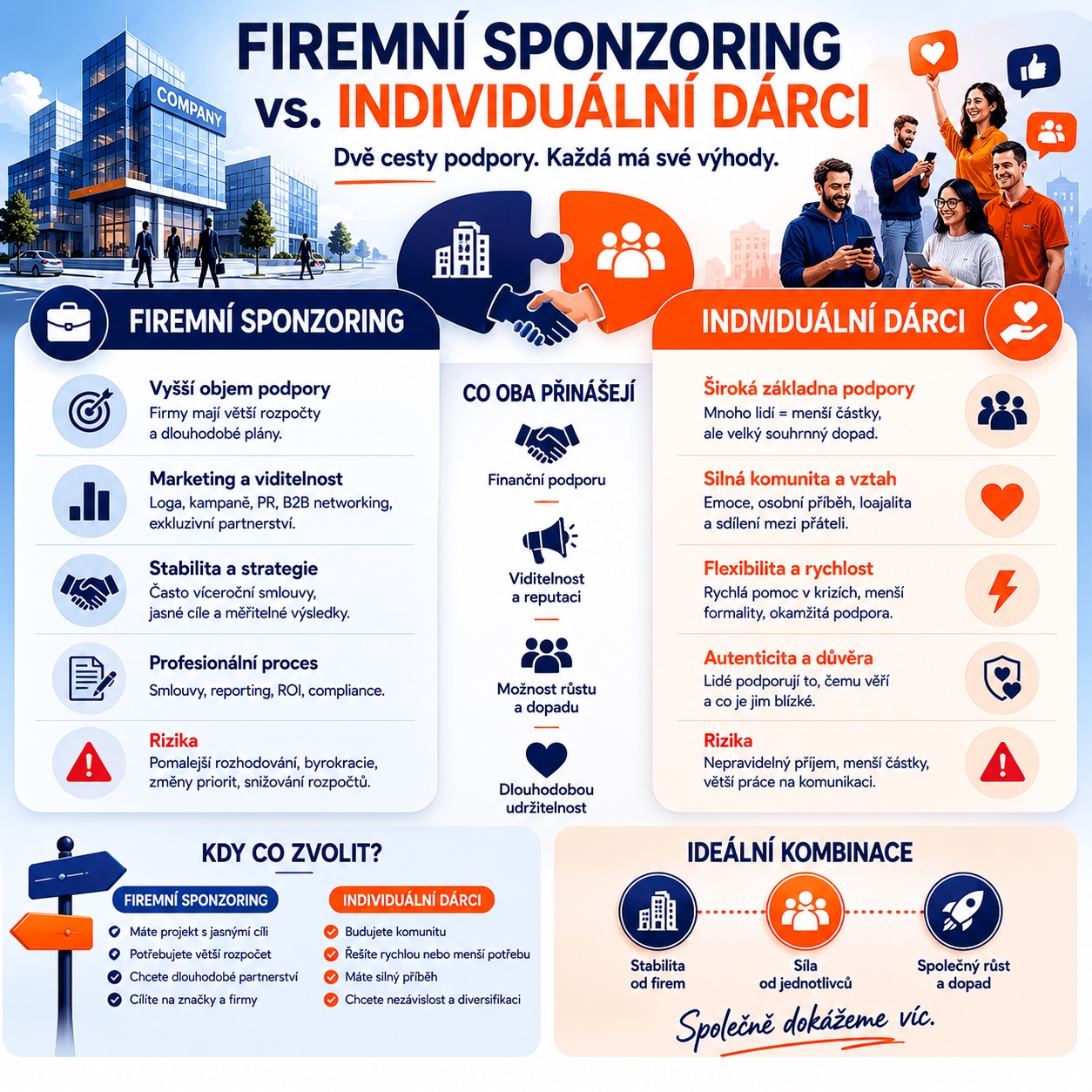
You need support for your project. Two paths present themselves — approach a company that will provide funding in exchange for promotion, or seek individual donors who contribute out of pure enthusiasm. Each route has its own advantages and pitfalls. Which is more stable? Which is more flexible? The table lays it out.
Comparing corporate sponsorship and individual donors
| Corporate sponsorship | Individual donor |
|---|---|
| One or a few entities (companies) — larger amounts | Many individuals — smaller amounts (hundreds to thousands of CZK) |
| Formal contract, clear terms, exchange of services (logo, mentions) | Informal, often without a contract, a gift without expectation of return |
| Moderate bureaucracy — invoices, reports, budget approvals | Minimal bureaucracy — a thank-you is usually enough |
| High reliability — funds arrive according to the contract | Lower reliability — a donor can stop giving at any time |
| Low flexibility — changes typically require a contract addendum | High flexibility — you agree directly, no formalities |
| Long-term support (years, renewable agreements) | Often one-off or irregular support |
| Suitable for athletes, artists, local events, larger projects | Suitable for smaller projects, entry fees, collections, one-off campaigns |
What follows from the table?
Corporate sponsorship is stable but less flexible. If you need certainty that funds will arrive every month or cover a whole season, a company is the better option. You will need to meet obligations — a logo on a jersey, mentions on a website, joint events. Any change (for example, moving a date) usually means paperwork.
Individual donors, by contrast, are flexible and personal. You can agree directly, without complicated contracts. Donors often want nothing in return but the feeling that they helped. The drawback? They are less reliable. Someone may give today and disappear tomorrow. And finding hundreds of donors can be demanding.
Who is more reliable and who more flexible?
- More reliable — a corporate sponsor. You have a contract, deadlines and clear conditions. Funds arrive if you fulfill your side.
- More flexible — an individual donor. No formalities; you can use the money as needed. Change of plan? You simply discuss it.
Can they be combined?
Yes — and often it pays off. Corporate sponsorship can cover steady costs — venue rental, equipment, coaches. Individual donors can top up the small extras — travel, refreshments, prizes. The combination gives you both certainty and flexibility.
Our main sponsor pays for the hall rental and the coaches. From individual donors we raise funds for trips to competitions. If we relied only on a company, we wouldn’t cover the small items. If we relied only on donors, we wouldn’t have certainty.
Pavel, youth team coach
How to choose?
- Corporate sponsor — if you need stable, long-term support; if you can offer attractive visibility in return; if you accept formalities.
- Individual donor — for smaller, one-off projects; if you prefer not to provide advertising; if you can reach a crowd (for example via social media).
Ask yourself: do I want certainty and stability, or freedom and flexibility? The answer will point you to whom to approach.
Author: Sponza editorial team
Photos: (illustrative – company vs. individual)