
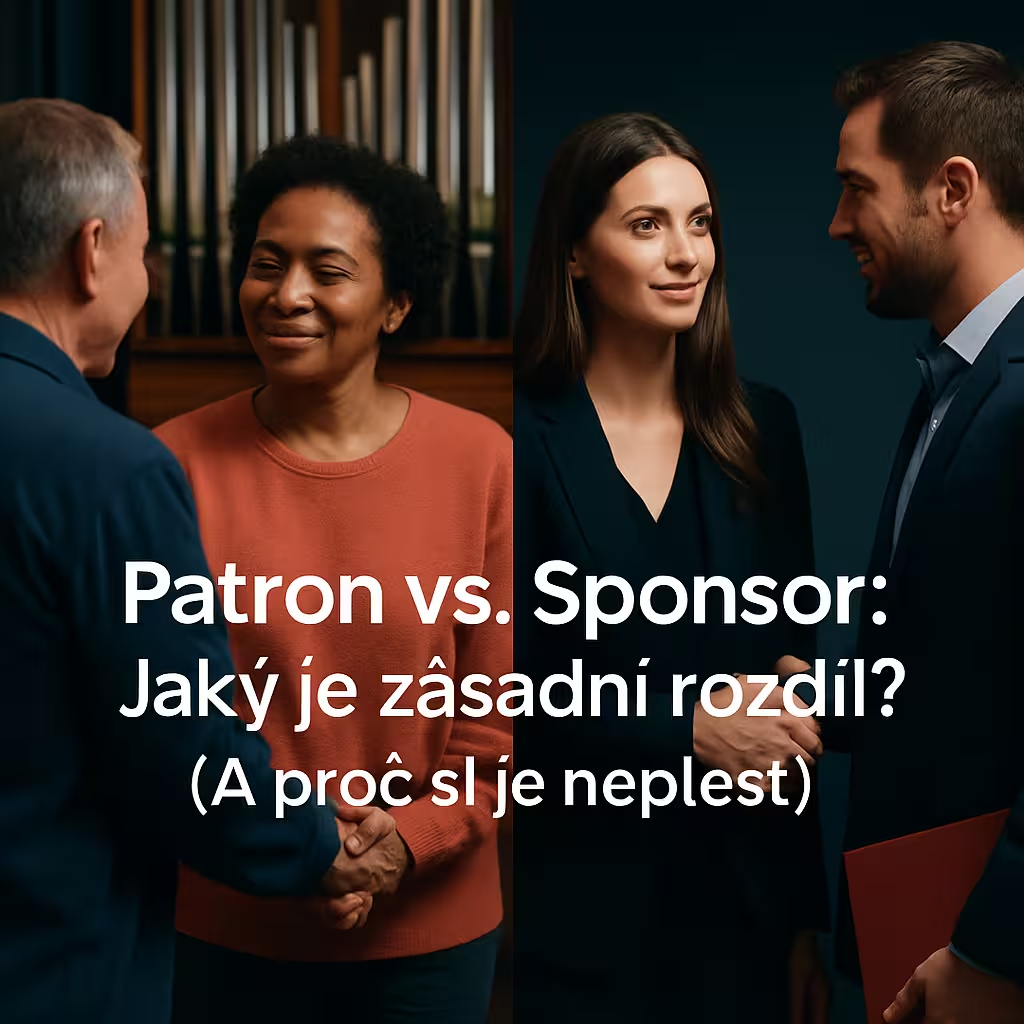
“We are looking for a sponsor for our festival.” “We secured a patron to restore the organ.” They sound similar, but in fundraising these are two completely different approaches. A patron and a sponsor have different motivations, different expectations in return, and a different relationship with you. Confusing them can cost you money—or your reputation. Here’s a clear comparison.
In short: A sponsor wants something back. A patron mainly wants to be thanked.
A sponsor is a business partner. They give you money or goods and expect a clearly agreed return—logo on a jersey, advertising in the programme, a mention on TV. A patron supports out of conviction. They want to help a good cause; recognition and the feeling of leaving a legacy are usually enough reward. Sometimes they don’t even want that.
Comparison table – clear at a glance
| Criterion | Sponsor | Patron |
|---|---|---|
| Main motivation | Advertising, brand image, sales, tax-deductible expense (but that’s secondary) | Love of the field, legacy, personal fulfilment, prestige |
| Expecting a return? | Yes—explicitly agreed. (logo, ad spot, tickets, on-stage welcome) | Generally no, or only symbolic. (plaque, name in an annual report, a thank-you) |
| Contract | Standard advertising/sponsorship contract with deliverables | Gift/donation agreement (often without entitlement to a return) |
| Length of relationship | Often one to two years, then ROI is evaluated | Years, sometimes lifelong, often passes to heirs |
| Tax benefits | Tax-deductible expense—if it counts as advertising | Deduction from taxable income for donations (up to 15%) |
| Typical donors | Companies (B2C brands, banks, carmakers, breweries) | Individuals, families, corporate foundations, rarely a company directly |
| What it costs you | Time spent fulfilling deliverables (reports, photos, logos everywhere) | Cultivating the relationship, personal care, thanking |
Practical example: A festival and a library
Imagine you’re organising a summer festival. A commercial sponsor—a brewery—gives you CZK 50,000 in exchange for their logo on the backdrop behind the stage, in every ad spot, and a beer tent on site. Contract, invoice, accounting.
A patron—say, a former mayor who loves music—donates CZK 50,000 for the children’s programme. He only asks for photos from the workshops and an annual thank-you in the local paper. Sometimes not even that. Send him a personal letter and he may be moved to tears.
Why is the distinction important?
- If you offer a sponsor “just” a thank-you—they may take offence and walk away. They want advertising.
- If you offer a patron advertising space—they may be confused or offended. They don’t want to sell; they want to help.
- Mixing up the terms publicly—people then don’t understand why a “sponsor” refuses a simple thank-you. It damages trust in nonprofits.
“Once we approached a company offering patronage—no logo, just a name in the acknowledgements. The owner was offended: ‘So you don’t want us to advertise with you? That’s a waste of time.’ Since then we offer two options: a sponsorship package (logo, advertising) and a patron package (acknowledgement, exclusive events). It works perfectly.”
Martina, theatre fundraiser
What if someone is both? For example a family business
Yes—both can happen. Companies often do both: sponsorship (pure advertising) and patronage (support without claim, for example via a corporate foundation). Distinguish who you are dealing with: the marketing department = sponsor. The foundation or the owner personally = patron.
Summary – a simple rule
Sponsor = I want advertising for my money.
Patron = I want to support a good cause; please thank me.
If you keep this in mind every time you reach out, you’ll avoid many awkward moments and unsuccessful meetings. You’ll give each group exactly what they need.
Author: Sponza editorial
Photographs: (illustrative – two labels: sponsor vs. patron)
Štítky: Osobnosti, Partnerství, Podpora