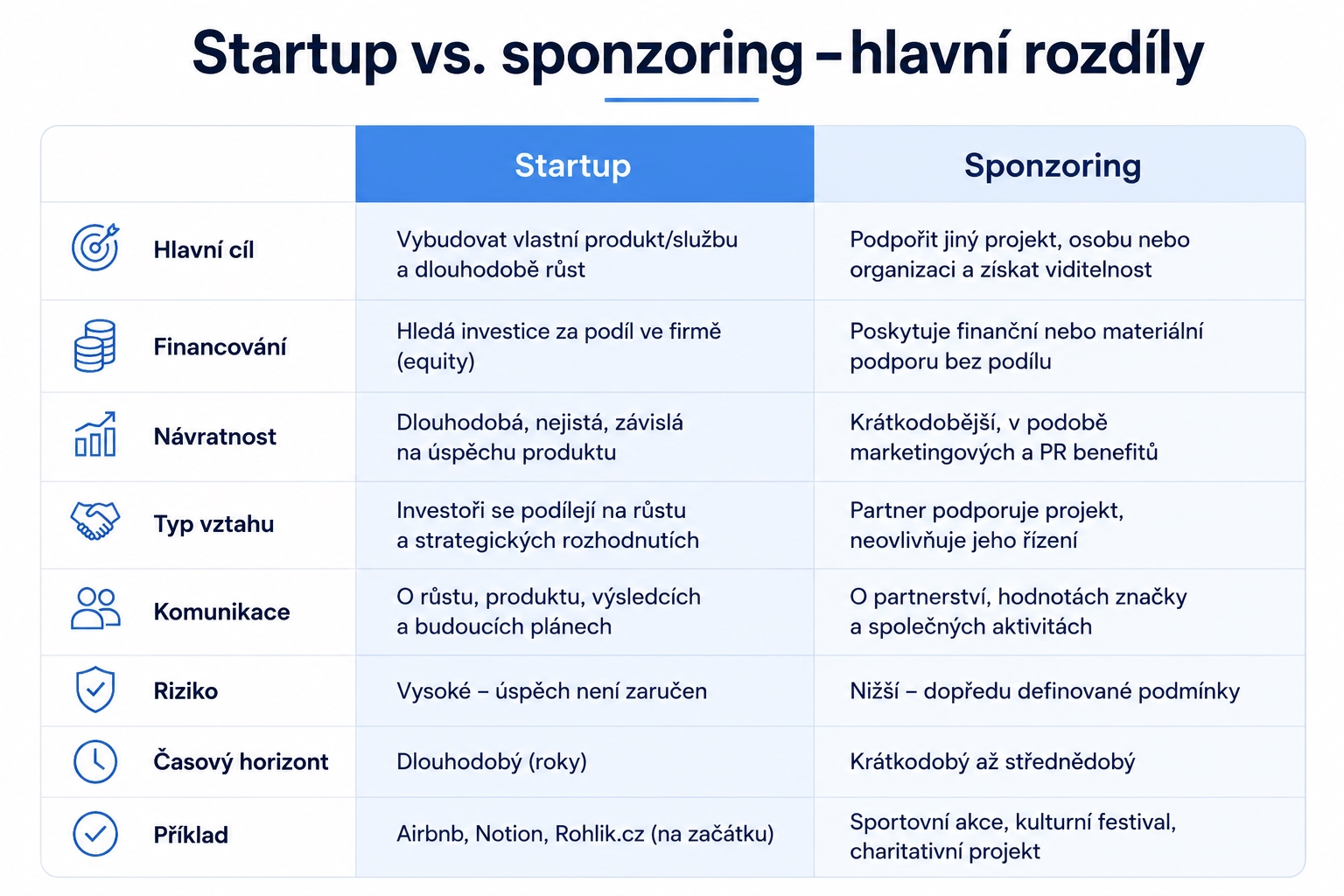
A young person with an idea or talent faces a pivotal choice. Should they take the route of a startup investor who provides capital in exchange for equity? Or should they approach a sponsor who backs the project without claiming ownership? Both paths have advantages and pitfalls. The key differences are summarized in the table below.
Comparison at a glance
| Startup (investor) | Sponsorship (partner) |
|---|---|
| The investor takes a stake in the company (typically 10–30 %) | The sponsor does not take equity; they receive contractual deliverables (logo placement, promotion) |
| The investor gets involved in governance and may have veto rights | The sponsor does not participate in management; they are a clean partner |
| The investor is motivated by profit from a future sale of their stake | The sponsor is motivated by visibility, brand image, or goodwill |
| Funds are intended for growth and scaling the business | Support is tied to a specific project, season, or event |
| An investor typically expects an exit (sale) within 5–10 years | A sponsor expects contractual fulfilment, not an exit |
| Suitable for tech startups and innovations | Suitable for athletes, artists, researchers, and local projects |
| Investment amounts are usually larger (millions) | Support is generally smaller (thousands to hundreds of thousands), but can be long-term |
What does the table tell us?
An investor is a good fit for those who want rapid growth, to build a company and are willing to share decision-making. It’s a route for ambitious entrepreneurs with a clear plan. A sponsor, by contrast, is ideal for athletes, artists, researchers or local initiatives — they back a specific aim but do not interfere with your autonomy.
Can they be combined?
Yes. Many successful projects start with sponsorship — it provides early funding and results. Later, investors arrive because there is something tangible to show. A hockey player supported by a local company may reach national teams and then attract major sponsors. A developer with a grant for a prototype may land the first customer and then seek venture capital.
A sponsor helped me first — they bought my first computer. Then an investor approached me. Without that initial help I would have had nothing to show. The two things don’t exclude each other; they complement one another.
Lukáš, creator of a successful mobile app
How to choose?
- Investor – if you aim to build a company, scale up, and hire people. If you want rapid growth and are willing to share decision-making.
- Sponsor – if you need support for a specific project, tournament, exhibition, or season. If you don’t want to lose control. If you are an athlete, artist, researcher, or a local activist.
Ask yourself a simple question: Do I want to build a business or focus on my craft? An investor will help with the former; a sponsor with the latter. Both are valid choices — it depends on your path.
Author: Sponza editorial team
Photo: (illustrative – choosing between two paths)