Sponsorship vs. Crowdfunding. When to approach a company and when to turn to the crowd?
You have an idea or a project and you need funds. Two of the most common routes are classic sponsorship (a company gives you money in exchange for promotion) and crowdfunding (you collect contributions from dozens or hundreds of people). Each path has different rules, a different degree of freedom and a different relationship with your supporters. Which is right for you? The table below makes it clear.
Comparing sponsorship and crowdfunding
| Classic sponsorship | Crowdfunding |
|---|---|
| One or a few entities (companies) | Many small backers (dozens to thousands) |
| The sponsor provides funds in exchange for promotion (logo, mentions) | Backers contribute money for rewards (product, thank‑you) or out of enthusiasm |
| Negotiations are private; terms are individualized | Public campaign; everyone can see the progress |
| Sponsors often expect a return service (branding, collaboration) | Backers often expect nothing except the feeling of having helped |
| Support can be long‑term (years) | Support is one‑off (for a specific campaign) |
| Suitable for athletes, artists, local events | Suitable for innovative products, books, albums, films |
| Requires personal meetings and pitching to companies | Requires a video, social media and the ability to sell an idea |
What does the table show?
Classic sponsorship is more stable and personal. If you find a company that believes in you and your project, you can secure support for years. You negotiate with a specific person and set the terms. The downside? Finding that first sponsor can be hard. Crowdfunding is public: you reach the crowd and each person contributes a small amount. You don’t have to commit to a single company, and you also get valuable feedback. But be prepared: running a campaign takes a lot of time and energy.
Can they be combined?
Yes — and it often pays off. Start by finding a sponsor who provides the basic capital to make a prototype or produce a campaign video. Then launch a crowdfunding drive; having something tangible makes you more credible. Or use a successful crowdfunding campaign as proof of public interest and present those numbers to a potential major sponsor. The combination is a powerful tool.
“Crowdfunding gave us our first customers and feedback. When we then approached a sponsor, we no longer had empty hands but hundreds of supporters. That decided it.”
Karolína, author of a successful campaign
How to choose?
- Sponsorship – if you need stable, long‑term support. If you’re comfortable negotiating with companies. If you operate in sport, culture or local community projects.
- Crowdfunding – if you have a product people can pre‑order. If you can produce a convincing video and communicate on social channels. If you want to test whether there is demand for your idea.
Ask yourself: do I want one big partner, or thousands of small fans? Both paths are valid — they just lead to different kinds of relationships and different ways of working.
Author: Sponza Editorial Team
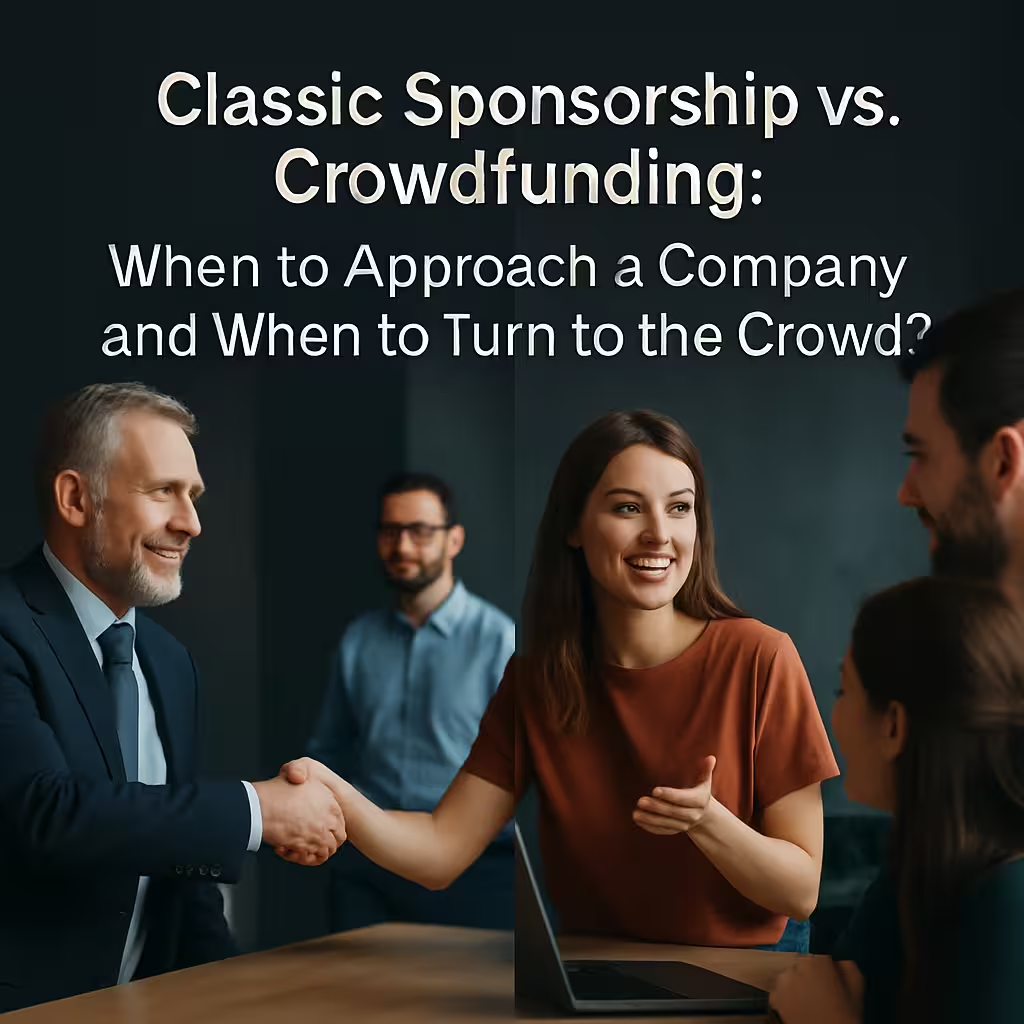
Photographs: (illustrative – sponsor vs. crowd of donors)