
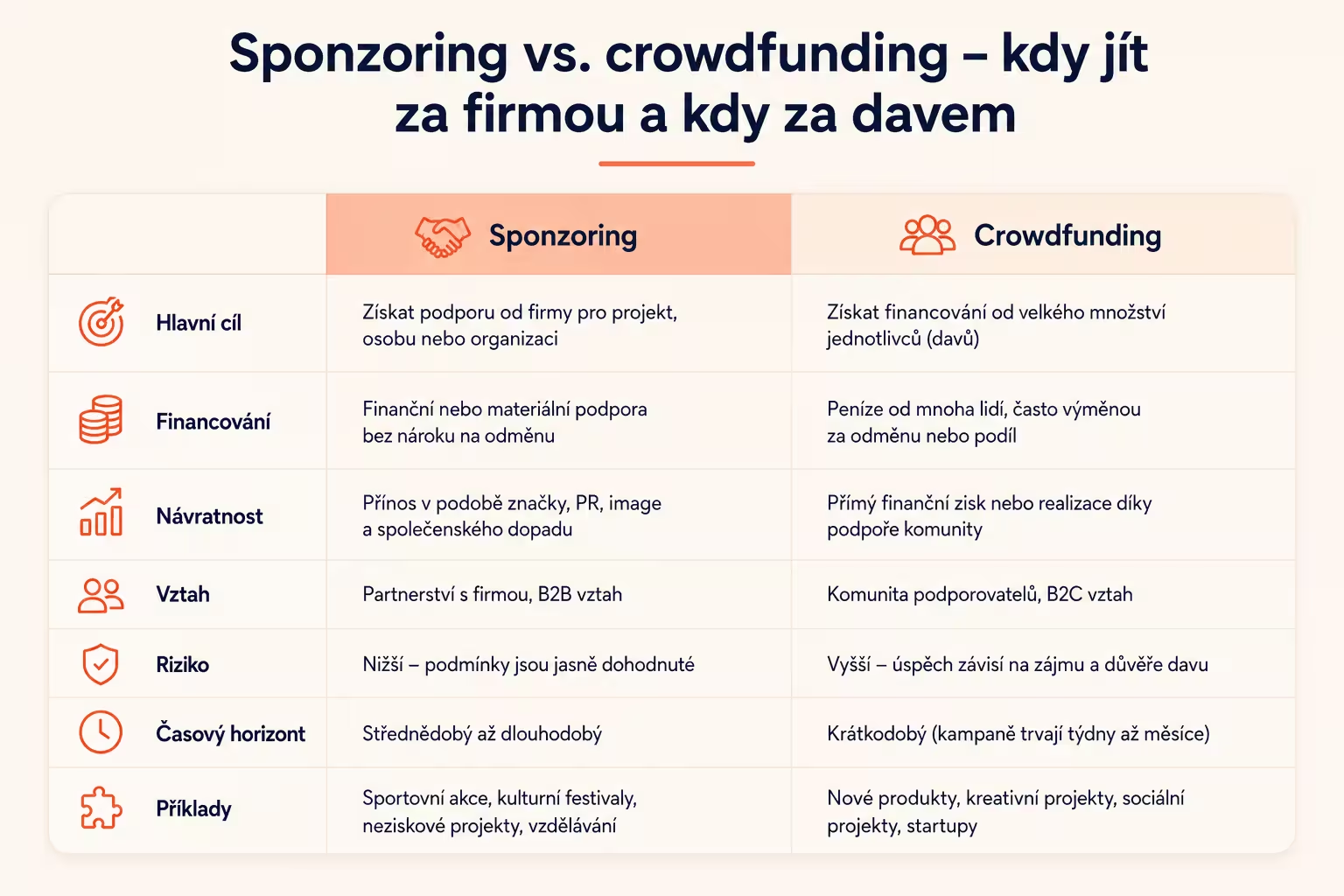
You need funding for your project. Two common routes are sponsorship from a company or a grant from public sources, EU funds or foundation programmes. Each comes with different rules. Sponsorship is fast and flexible, but you usually must offer something in return. Grants are often larger but come with bureaucracy and checks. Which one suits you? The table explains.
Comparing sponsorship and grants/subsidies
| Sponsorship | Grant / Subsidy |
|---|---|
| Source of funds Private company or individual | Source of funds The state, regional authorities, EU funds, foundation funds |
| Speed Days to weeks (direct negotiations with a company) | Speed Months to a year (call, evaluation, signing) |
| Bureaucracy Minimal – typically an offer and a contract | Bureaucracy High – application, budget, accounting, reports |
| Flexibility High – you can use the funds as agreed | Flexibility Low – funds are tied to specified line items |
| Reciprocal benefits Expected – logo, promotion, collaboration | Reciprocal benefits No commercial obligations, only project outputs |
| Control By contract, often lenient | Control Strict – audits, monitoring visits, sanctions |
| Suitable for Athletes, artists, local events, quick support | Suitable for Research, large projects, infrastructure, nonprofit goals |
What does the table tell us?
Sponsorship is fast, flexible and human. You can often access funds almost immediately and paperwork is light. Companies rarely want complex reporting — they usually accept that the agreement is fulfilled. The downside? You need to offer a return: a logo on a jersey, a mention on a website, or a joint event. And finding a sponsor isn’t always easy.
Grants or subsidies are the opposite. They can provide more substantial funding, but you must go through application rounds, budgets and reports. Every crown is often pre-allocated—to travel, materials, salaries. You can’t reassign funds freely. After the project there may be audits and a risk of having to return money. On the plus side—you don’t have to provide commercial advertising. Project outputs are usually sufficient.
Who is more flexible and who is more bureaucratic?
- More flexible – clearly sponsorship. You agree openly, funds arrive quickly and you use them as needed. If circumstances change, you simply renegotiate.
- More bureaucratic – grants and subsidies. An application for a few hundred thousand can run to dozens of pages, attachments and forms. Then you face dozens more pages of accounting.
Can they be combined?
Yes, and often it pays off. Use a grant to cover large, predefined items (for example equipment purchases, repairs, salaries). Complement with sponsorship to finance smaller items the grant won’t allow—catering, promotion or volunteer T‑shirts. But beware—combining means double the administration. You must ensure the same expense isn’t charged to two funders.
We used a grant to buy computers and software. A sponsor covered coffee at workshops and T‑shirts for volunteers. The grant wouldn’t pay for T‑shirts, the sponsor couldn’t fund computers. Together it worked perfectly.
Eva, coordinator of a community centre
How to choose?
- Sponsorship – if you need money fast, for a specific event or season. If you can offer companies an attractive return. If you want to avoid complex reporting.
- Grant / subsidy – if you have a large, long‑term project with clear outputs. If you don’t mind bureaucracy and can write strong applications. If you prefer not to provide commercial promotion.
Ask yourself: Do I want funds quickly and flexibly but must offer something in return? Then sponsorship. Do I want money without commercial obligations, but with paperwork? Then a grant. Both have their place.
Author: Sponza editorial team
Photograph: (illustrative – choosing between a sponsor and a grant)