
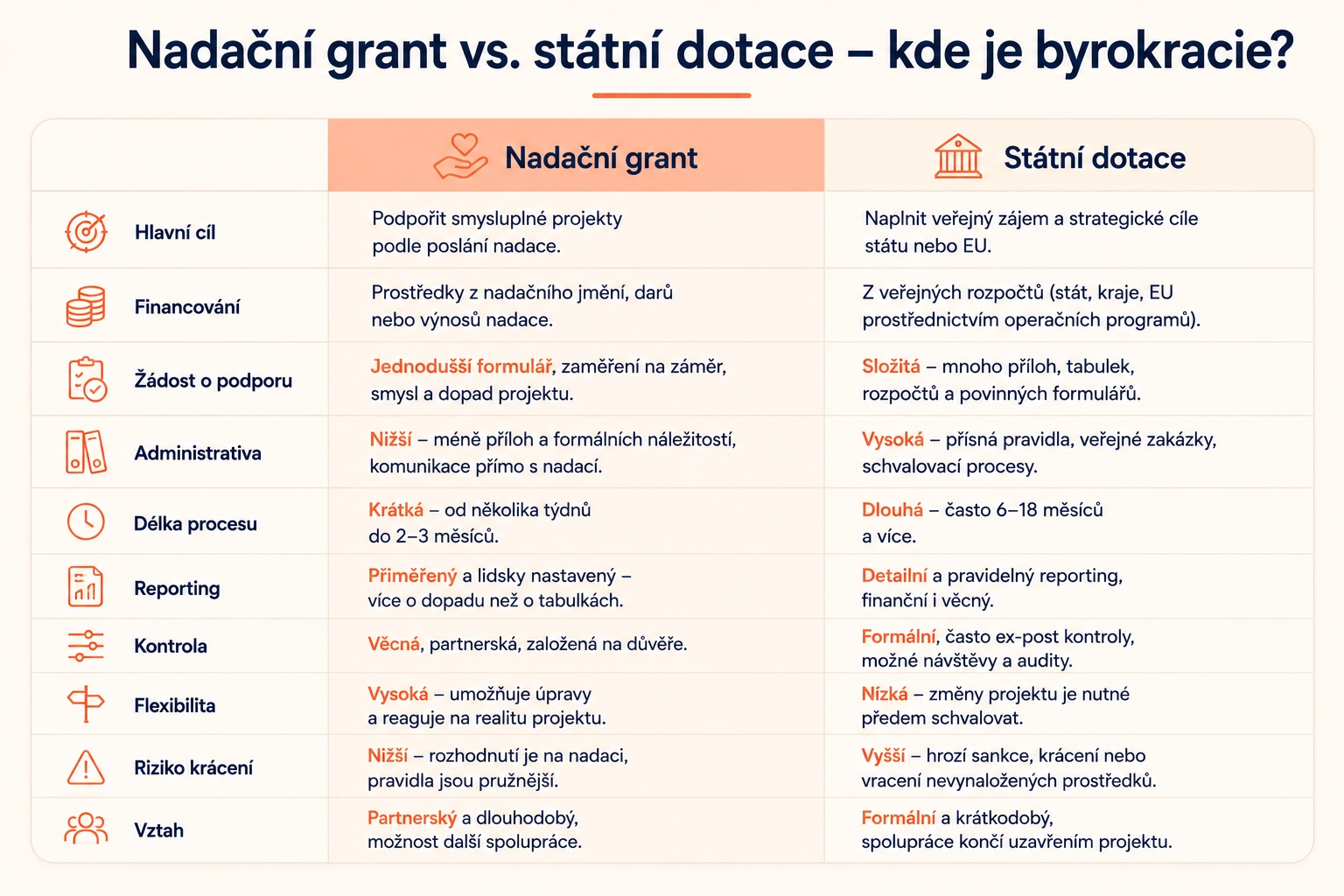
Grants from foundations and subsidies from the state or the EU: both are public or semi-public funds. Yet they differ in purpose, scale, paperwork and adaptability. Which source suits your project best? We compare them in the table below.
Comparing a foundation grant and a state subsidy
| Foundation grant | State subsidy (including EU funds) |
|---|---|
| Source of funds Private foundations, corporate grant-making funds |
Source of funds State budget, regional authorities, EU |
| Purpose Support for broad themes (education, culture, sport, social projects) |
Purpose A specifically defined programme (e.g. monument restoration, research, equipment grants) |
| Amount Tens of thousands to single-digit millions CZK |
Amount Hundreds of thousands to tens of millions CZK |
| Bureaucracy Moderate – application, budget, final report |
Bureaucracy High – call for proposals, extensive application, selection process, accounting, audit |
| Flexibility Higher – foundations often allow budget adjustments |
Flexibility Minimal – funds are tightly tied to specific line items |
| Time from application to funds 2–6 months |
Time from application to funds 6–18 months |
| Suitable for Smaller projects, NGOs, local events, pilots |
Suitable for Large investments, infrastructure, long-term programmes |
What follows from the table?
Foundation grants tend to be more agile and quicker. Foundations often back an idea and do not always require a complex competitive process. There is paperwork, but it’s generally manageable. By contrast, state subsidies (including European funds) are larger but bound by strict rules. Every crown is pre-allocated, changes are difficult and oversight is strict.
The biggest difference is purpose. Foundation grants support a wide range of themes—from culture to social innovation. State subsidies are usually announced for a very specific programme—if you don’t fit the criteria, you won’t be eligible.
Can they be combined?
Yes. Projects often rely on multiple sources. A foundation grant can cover the preparation phase or a pilot; a state subsidy can finance large-scale implementation. But be careful not to double-fund the same expenses. Combining funding sources requires careful accounting.
The foundation grant gave us quick money for the prototype. Once we proved it worked, we secured a state subsidy for production. Without that initial support, we wouldn’t have had anything to show.
David, founder of a tech start-up
How to choose?
- Foundation grant – if you need funds within six months, for a smaller project, a pilot or a local event. Also suitable if you can tell a clear, compelling story.
- State subsidy – if you have a large, long-term project that precisely matches a published programme. Also appropriate if you have the capacity to handle administration and audits.
Author: Sponza editorial team
Photographs: (illustrative – a comparison of two types of support)