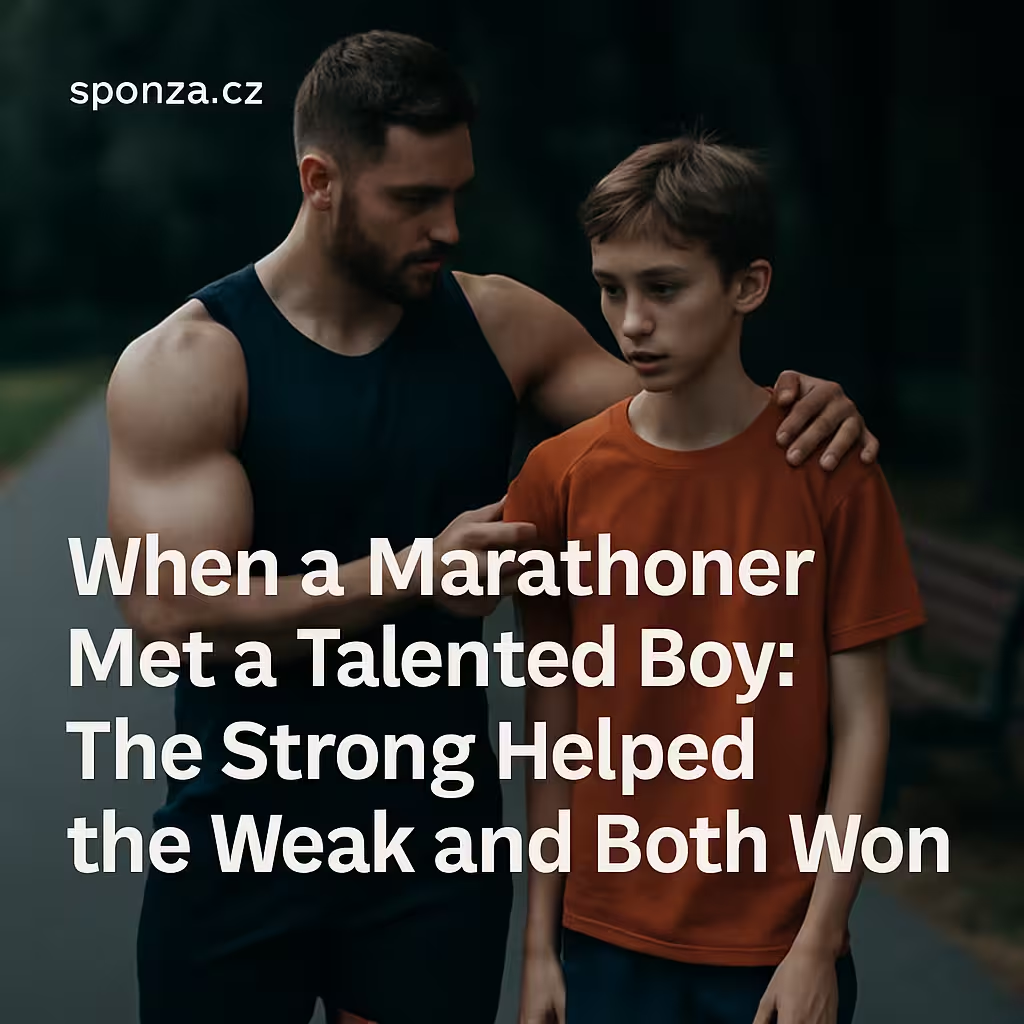
This is not a Cinderella story but a real moment from a Czech running path. It’s about a man who lifts heavy weights meeting a boy the wind might have blown away. Instead of overtaking him, he stopped. And he taught him that talent without support never reaches the finish line.
When Strength Met Speed
When Lukáš landed his feet on the concrete path in Prague’s Stromovka, he wasn’t chasing a record. His muscles needed an easy recovery jog. Muscles that had worked hard in the gym to lift a new personal best in the deadlift.
A boy sat on a bench by the track. Thin, shoulders rounded, a fire in his eyes. Twelve, maybe thirteen. His name was Matyáš.
Lukáš passed him. Then he turned back. Matyáš ran. Not pretty, not technically perfect. But fast. Incredibly fast. As if there were springs in his legs that nature gives to one in a million.
Talent with No One to Hold the Line
“He ran like a maniac, but after two hundred meters he was breathless. He had an oxygen debt for at least five minutes,” Lukáš remembers. “I asked who was coaching him. He said no one. That he just goes for runs because he enjoys it. But that after a few minutes his legs burn and his head spins.”
Lukáš thought of himself—of his own beginnings when he believed working at a hundred percent was enough, while the basics were missing.
So the strong decided to help the weak. Not for one Saturday. Properly.
Iron and Speed Combined: How It Started
The first weeks were hell. For both of them.
Matyáš had to stop running. “What? That’s nonsense, right?” he protested. But Lukáš knew what he was doing. The boy needed muscle. Not huge muscle, but firm, functional strength. He needed a core that would hold his light frame to the ground. He needed stability.
So the powerlifter took the undernourished sprinter under his wing.
- First month: Bodyweight squats, a one-minute plank (Matyáš was shaking after ten seconds), knee push-ups.
- Second month: The running ABCs. Nothing else. “I don’t like this,” the talent grumbled. But he listened.
- Third month: The first shared fartlek. Lukáš slowed to a pace that felt uncomfortably slow. Matyáš sped up to a pace that felt uncomfortably fast. They met in the middle.
Turning Point: The Moment It Clicked
It happened at a small half-marathon in Roudnice nad Labem. No one knew Matyáš. Lukáš told him: “Stay by my shoulder. Not as a racer, as the captain of a ship. Pull me.”
The first five kilometers were about breathing. The next five about pain in legs that now had strength. At the fifteenth kilometer Matyáš wanted to quit. His stomach hurt; he wanted to sit down and cry.
Lukáš put his hands on Matyáš’s shoulders. “Look. Remember the first squats? You wanted to give up then too. And you held on. This is the same squat. Just longer.”
Matyáš finished. Not first, but third in his category. And when he crossed the tape he didn’t check his time. He turned to Lukáš. And he smiled.
Why This Story Matters to Anyone Who Trains
Lukáš says today: “I gave him muscle. He gave me meaning.”
Strength training had stopped giving him joy; it was just numbers. But seeing Matyáš’s eyes light up when he first held a two-minute plank, or when he pulled fifty kilos in a deadlift under Lukáš’s watch—those moments beat any personal record.
This story isn’t just about “the gym is for everyone.” It’s about the fact that strong isn’t who lifts the most. Strong is who lifts someone else when they can’t lift themselves.
Conclusion: Everyone Has Talent. Only Some Have the Courage to Pass It On.
Today Matyáš races regularly. He’s still thin. The wind might still nearly take him. But now he has the strength in his legs to keep him grounded. And a coach behind him who showed that being strong doesn’t mean being harsh. It means being steady.
And Lukáš? After years he found a new challenge in running. He runs slower, but with a bigger heart. Because he understood that the heaviest weight you can lift is the responsibility for someone who is just starting out.
A Note for Sponza.cz Readers
If you have a “Matyáš” nearby—someone talented but lost—don’t walk past with your eyes on your phone. Stop. Offer a hand. Maybe together you’ll go farther than you ever could alone.